Simple French Crepes
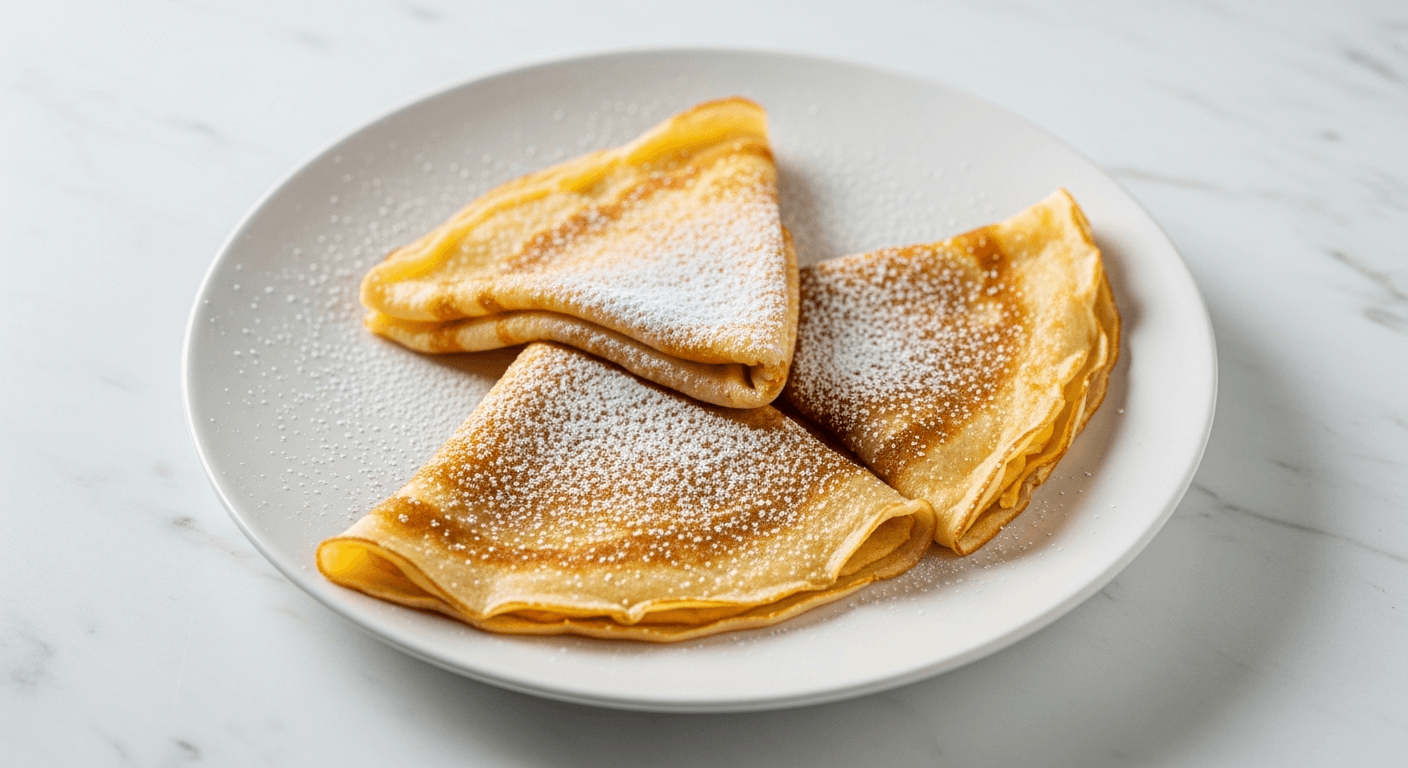
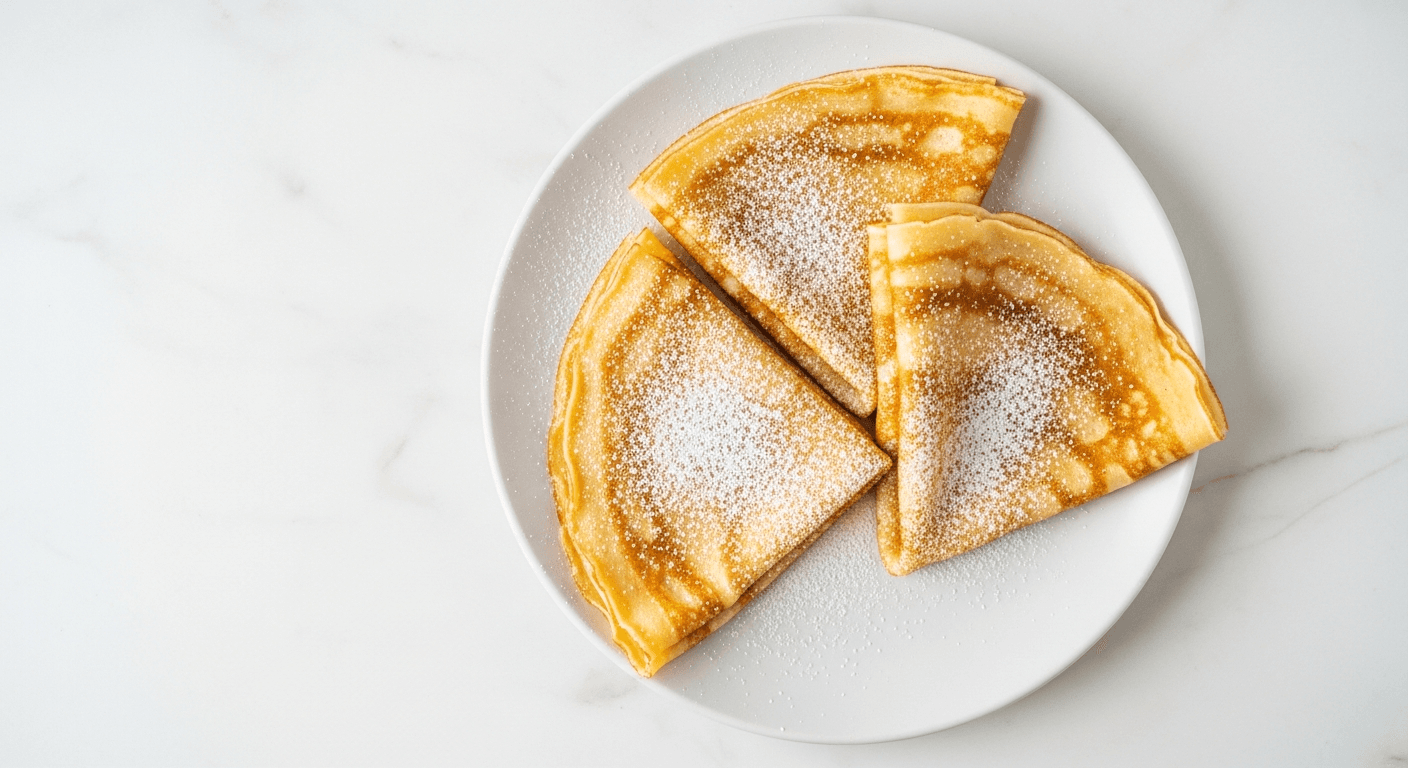
A French crepe uses the same four ingredients as a British pancake but in different proportions, with a longer rest and a hotter pan. The result is thinner, with a lacy, slightly chewy texture and a more pronounced egg flavour. The technique is straightforward: thin batter, hot pan, fast flip. These are the crepes you find at French street stalls and school canteens -- not the elaborate Suzette, just a proper crepe made well. They work with sweet or savoury fillings and take about 25 minutes from start to first crepe.
Ingredients
- 120g (4oz)plain flour, sifted
- 250ml (9fl oz)whole milk
- 125ml (4fl oz)cold water
- 2 (2)large eggs
- 30g (1oz)unsalted butter, melted
- 1 (1)pinch of salt
Method
- 1
Combine flour and salt in a bowl. Make a well and add the eggs. Whisk from the centre, gradually pulling in flour.
- 2
Add the milk gradually while whisking until smooth. Add the water and melted butter. Whisk to combine.
The batter should be thin -- thinner than single cream. Adding water as well as milk is the key difference from a standard British pancake batter. - 3
Rest for at least 30 minutes, or up to 24 hours in the fridge.
Longer resting produces a better crepe. Overnight is ideal. - 4
Heat a crepe pan or 20-22cm non-stick pan over medium-high to high heat. Wipe with butter using kitchen paper.
The pan should be hot enough that a drop of water evaporates immediately. - 5
Pour a small amount of batter (about 60ml) into the pan and tilt immediately in all directions to create a very thin, even layer. Pour any excess back.
Speed matters here. The batter begins to set the moment it hits the hot pan. - 6
Cook for 45-60 seconds until the edges are golden and lifting. Flip with a thin spatula or your fingers.
French crepe flipping by finger is a real skill. Use a spatula until you are confident. - 7
Cook the second side for 20-30 seconds. Stack on a warm plate.
Pro Tips
- →The batter needs at least 30 minutes to rest. Overnight in the fridge is even better.
- →The pan must be properly hot. Hotter than you expect for a crepe -- medium-high to high heat.
- →Pour any excess batter back into the jug. You want barely enough to cover the pan.
- →The second side is always paler than the first. This is normal -- serve first-side up.
Topping Ideas
Questions & answers
What is the difference between a French crepe and a British pancake?⌄
How thin should crepe batter be?⌄
Can I make crepe batter the night before?⌄
— Newsletter
Get the Full Pancake Day Plan
Recipes, shopping list, and tips — delivered the week before Pancake Day.
No spam. Unsubscribe any time.