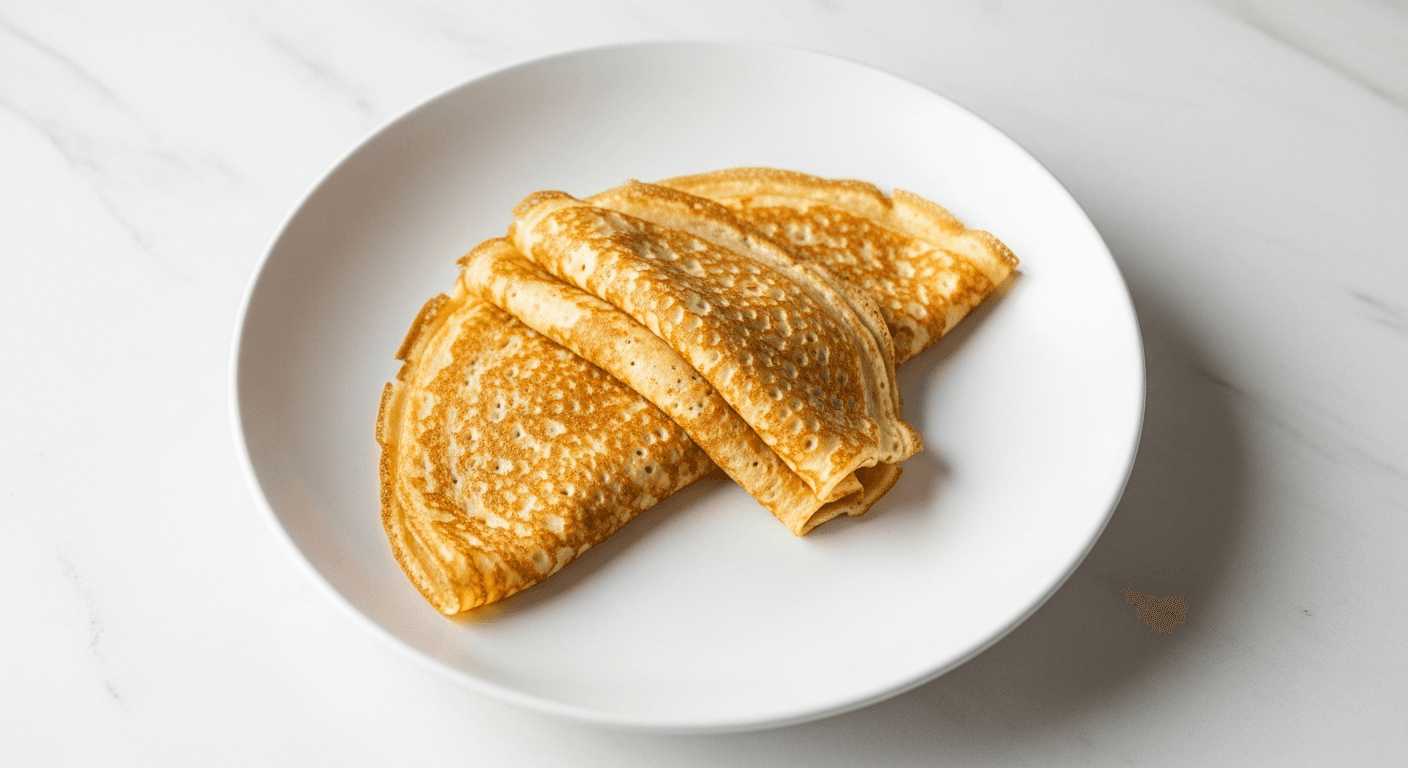
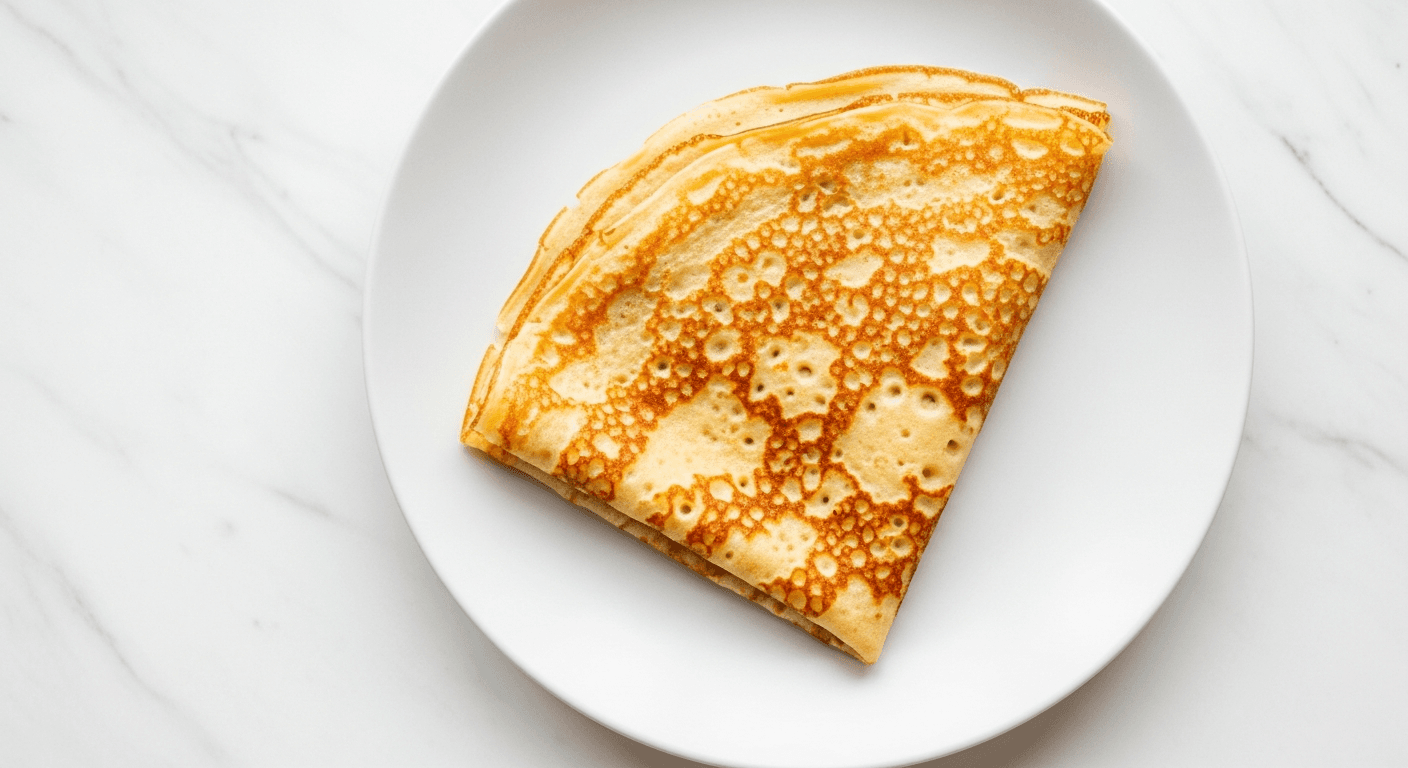
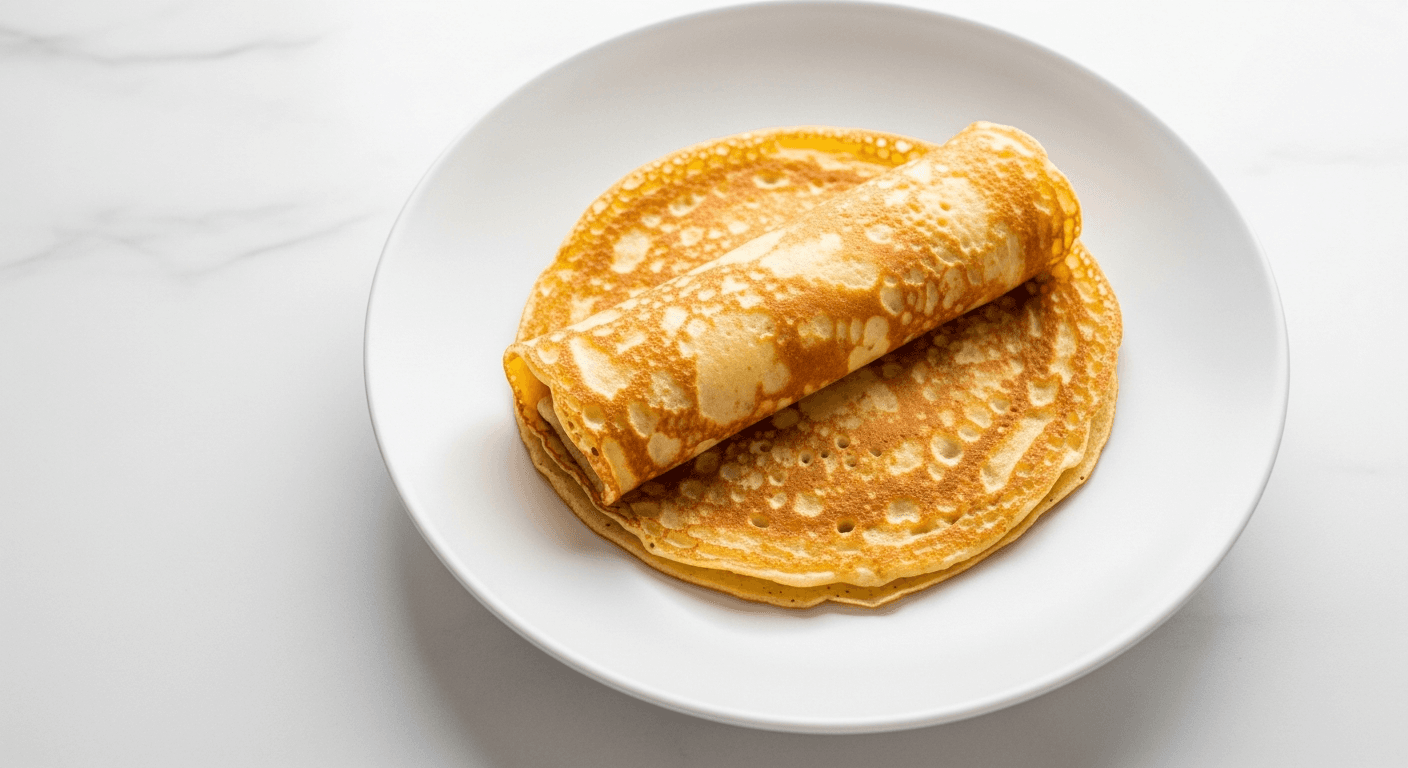
Gluten-Free Classic British Pancakes
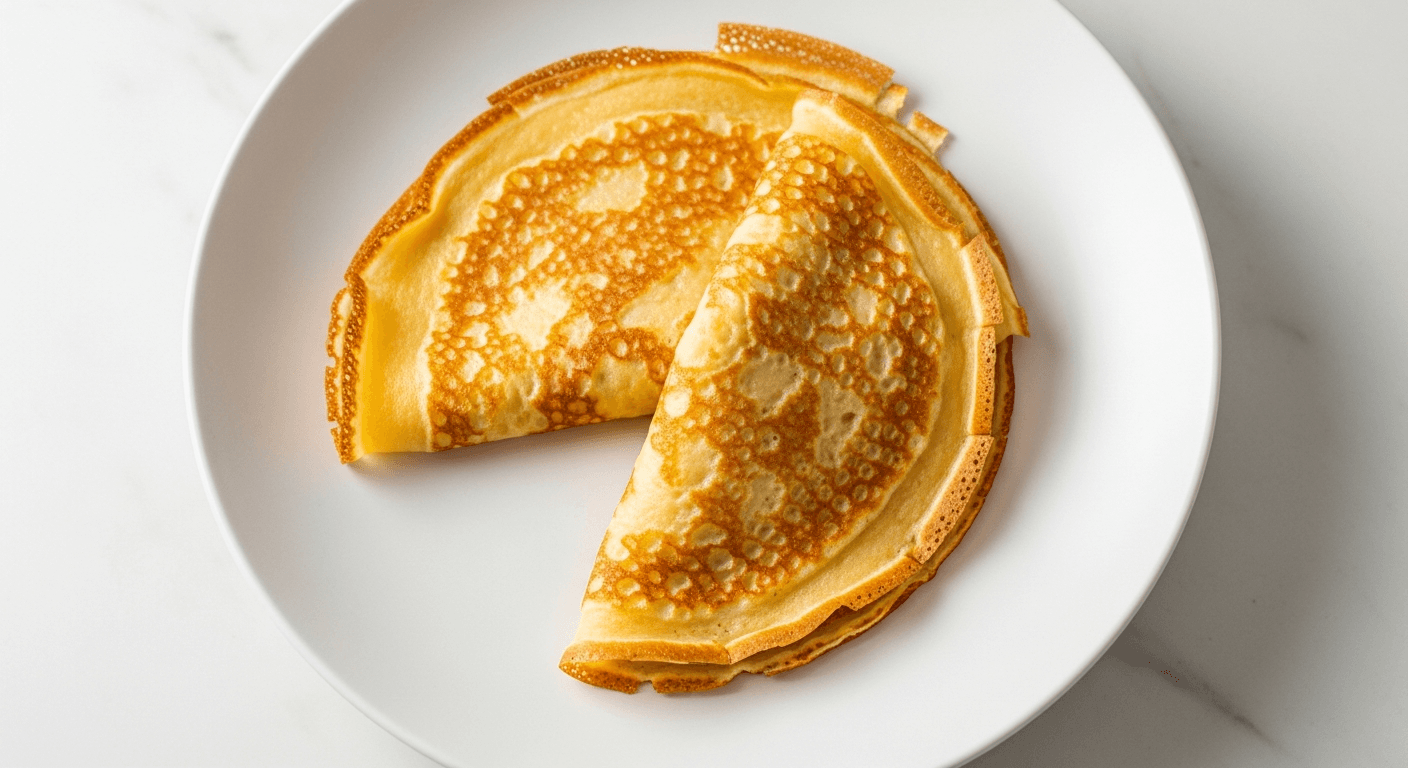
Gluten-free British pancakes that actually work -- thin, flexible, and capable of being rolled without cracking. The key is a blend of rice flour and a small amount of tapioca starch, which together produce the stretch and softness that rice flour alone cannot. Xanthan gum binds everything in the absence of gluten. The method is identical to the standard recipe: one bowl, one pan, fifteen minutes. If you have been making do with thick, dense gluten-free pancakes, this version will change your Pancake Day.
Ingredients
- 100g (3.5oz)white rice flour
- 25g (1oz)tapioca starch, also sold as tapioca flour
- 0.5 tsp (0.5 tsp)xanthan gum, essential for structure
- 300ml (10fl oz)whole milk
- 1 (1)large egg, at room temperature
- 25g (1oz)unsalted butter, melted
- 1 (1)pinch of salt
Method
- 1
Whisk together the rice flour, tapioca starch, xanthan gum, and salt in a large bowl.
Sifting the dry ingredients together removes lumps before you add liquid, which matters more with gluten-free flours. - 2
Make a well in the centre. Add the egg and half the milk. Whisk from the centre outwards until smooth.
- 3
Add the remaining milk and melted butter. Whisk until you have a thin, smooth batter. Rest for 15 minutes.
Gluten-free batter benefits from a longer rest than standard. The starches absorb the liquid more slowly. - 4
Heat a non-stick pan over medium-high heat. Add a small knob of butter and swirl to coat.
- 5
Pour just enough batter to coat the base, tilting immediately. Cook for 1-2 minutes until the edges lift cleanly.
Gluten-free pancakes are more fragile when hot. Wait until the edges are fully set before flipping. - 6
Flip with a thin spatula and cook for 30-45 seconds. Slide out and repeat.
Pro Tips
- →Tapioca starch is not optional -- it is what gives the pancake stretch. Do not substitute cornflour.
- →Xanthan gum is the binding agent here. Without it the pancakes will be fragile and prone to tearing.
- →Rest the batter for 15 minutes minimum. Gluten-free flours hydrate more slowly than wheat flour.
- →Use a thin, flexible spatula. Gluten-free pancakes are more delicate than standard when hot.
Topping Ideas
Questions & answers
What flour is best for gluten-free pancakes?⌄
Do gluten-free pancakes need xanthan gum?⌄
Why are my gluten-free pancakes thick and dense?⌄
— Newsletter
Get the Full Pancake Day Plan
Recipes, shopping list, and tips — delivered the week before Pancake Day.
No spam. Unsubscribe any time.